Printing & embroidery
Screen printing, embroidery or DTF: how to choose the right decoration for your logo
The same logo can look great or just okay depending on how it goes onto the garment. Before you request a quote, it helps to know the three main ways we decorate apparel and when each one makes sense. This guide walks through screen printing, embroidery and DTF transfers, plus a few quick questions to narrow it down.
Maya's World · October 25, 2026 · 3 min read
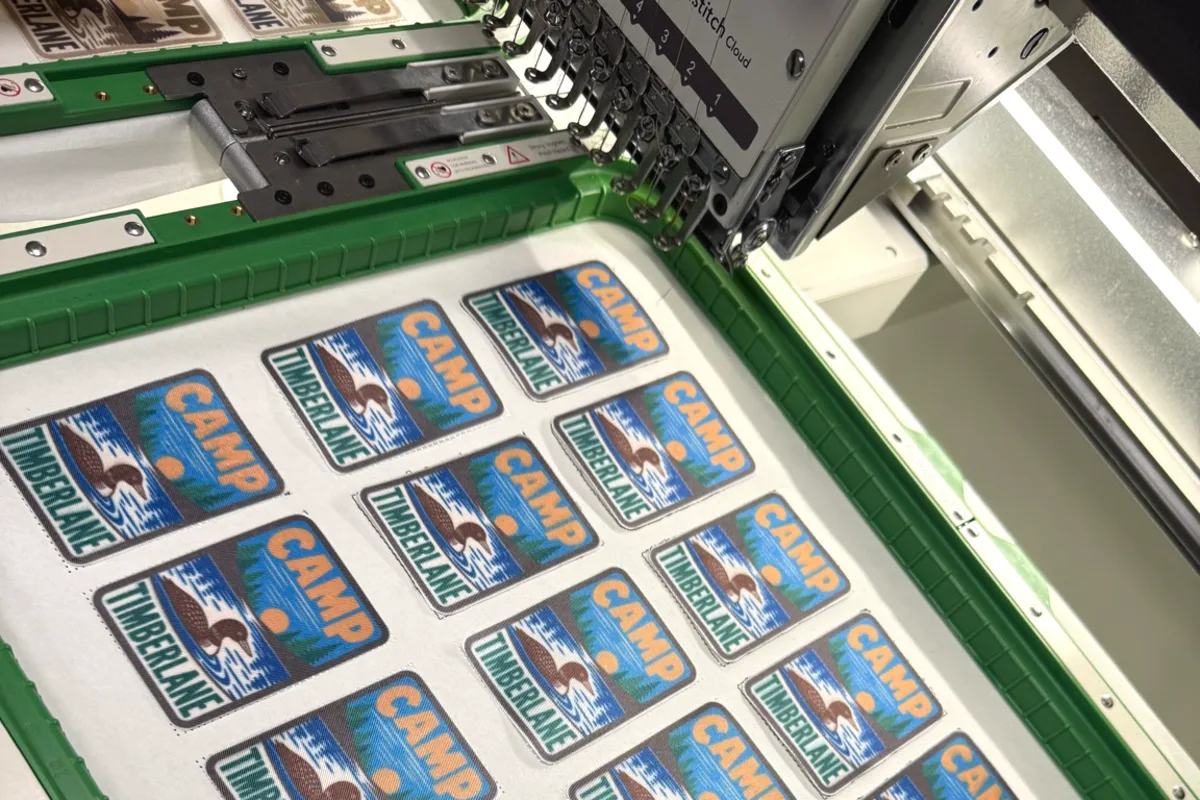
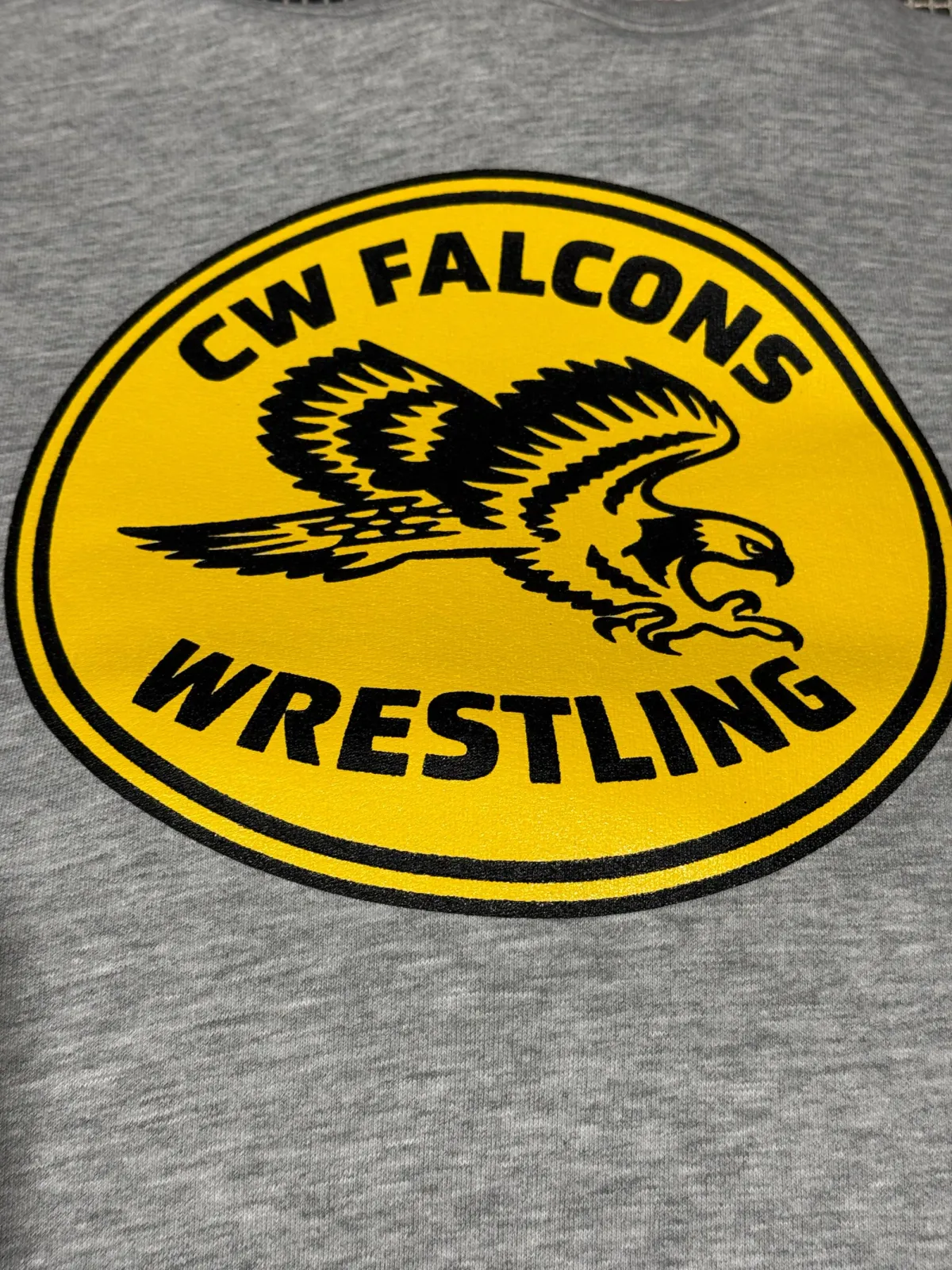
Screen printing: best value on larger runs
Screen printing pushes ink through a fine mesh screen onto the fabric, one colour at a time. Each colour in your design needs its own screen, so there is setup work up front. Once the screens are ready, every additional shirt is quick to print, which is why screen printing usually gives you the best price per piece on bigger orders.
It's a good fit when:
- You're ordering roughly 24 pieces or more of the same design.
- Your logo uses a few solid colours rather than photos or gradients.
- You need brand colours matched closely. Screen printing uses spot colours mixed to your brand.
- You want a print that holds its colour wash after wash, like event tees, staff shirts or team warm-ups.
It's less ideal for very small quantities or full-colour artwork with lots of shading, since every colour adds a screen.
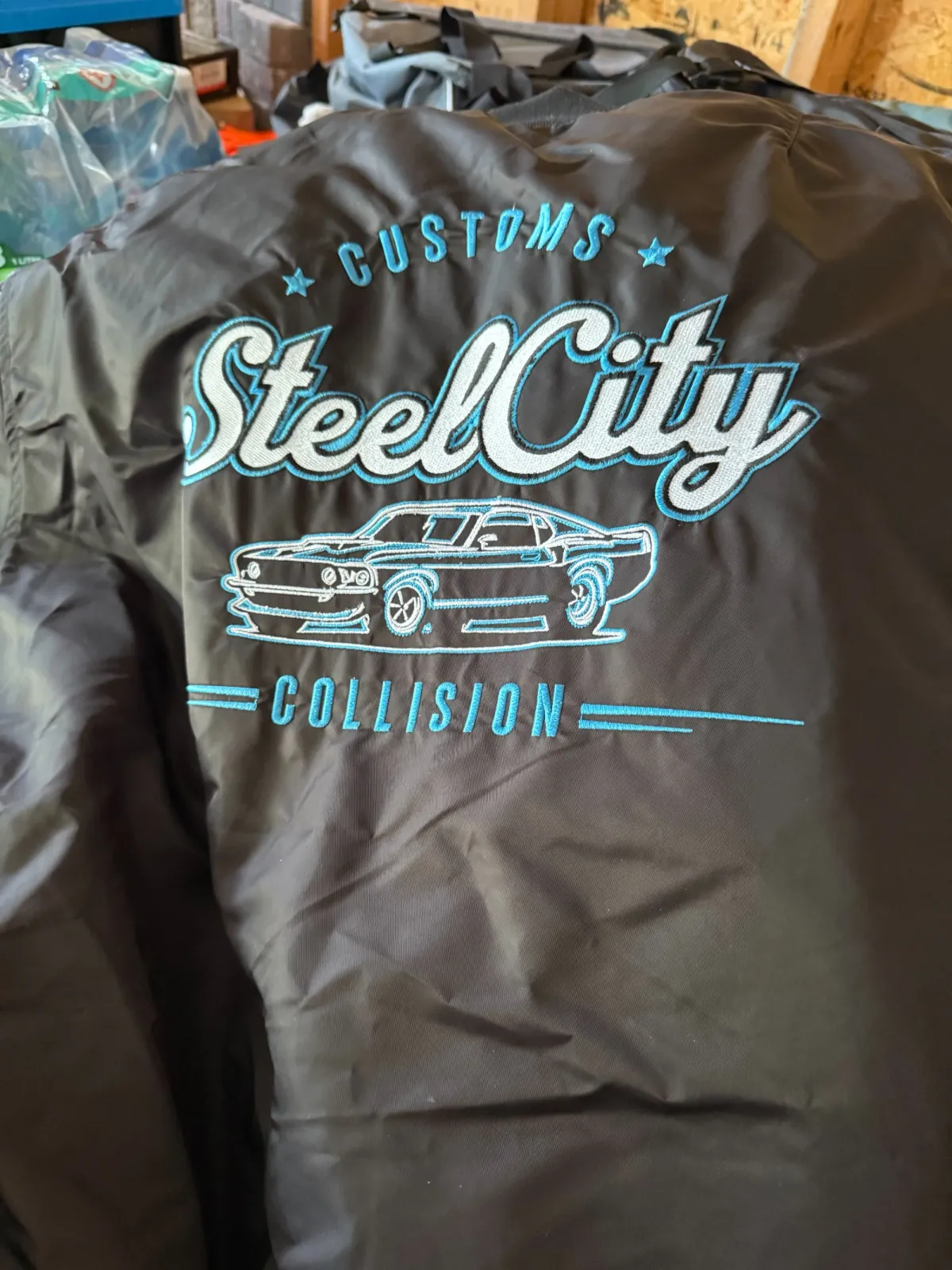
Embroidery: the polished, uniform look
Embroidery stitches your logo directly into the fabric with thread. Your artwork is first "digitized", which means it's converted into a stitch file that tells the machine where each stitch goes. We digitize in-house, so the stitch file is built for the garment you've chosen.
It's a good fit when:
- You want the classic look of staff uniforms, polos and caps.
- You're decorating thicker materials like fleece, twill, caps or bags.
- The logo sits in a smaller spot, like a left chest, sleeve or hat front.
Very fine text and tiny details can get lost in thread, so small lettering sometimes needs to be simplified or enlarged. Photographic images and soft gradients are usually better suited to another method.
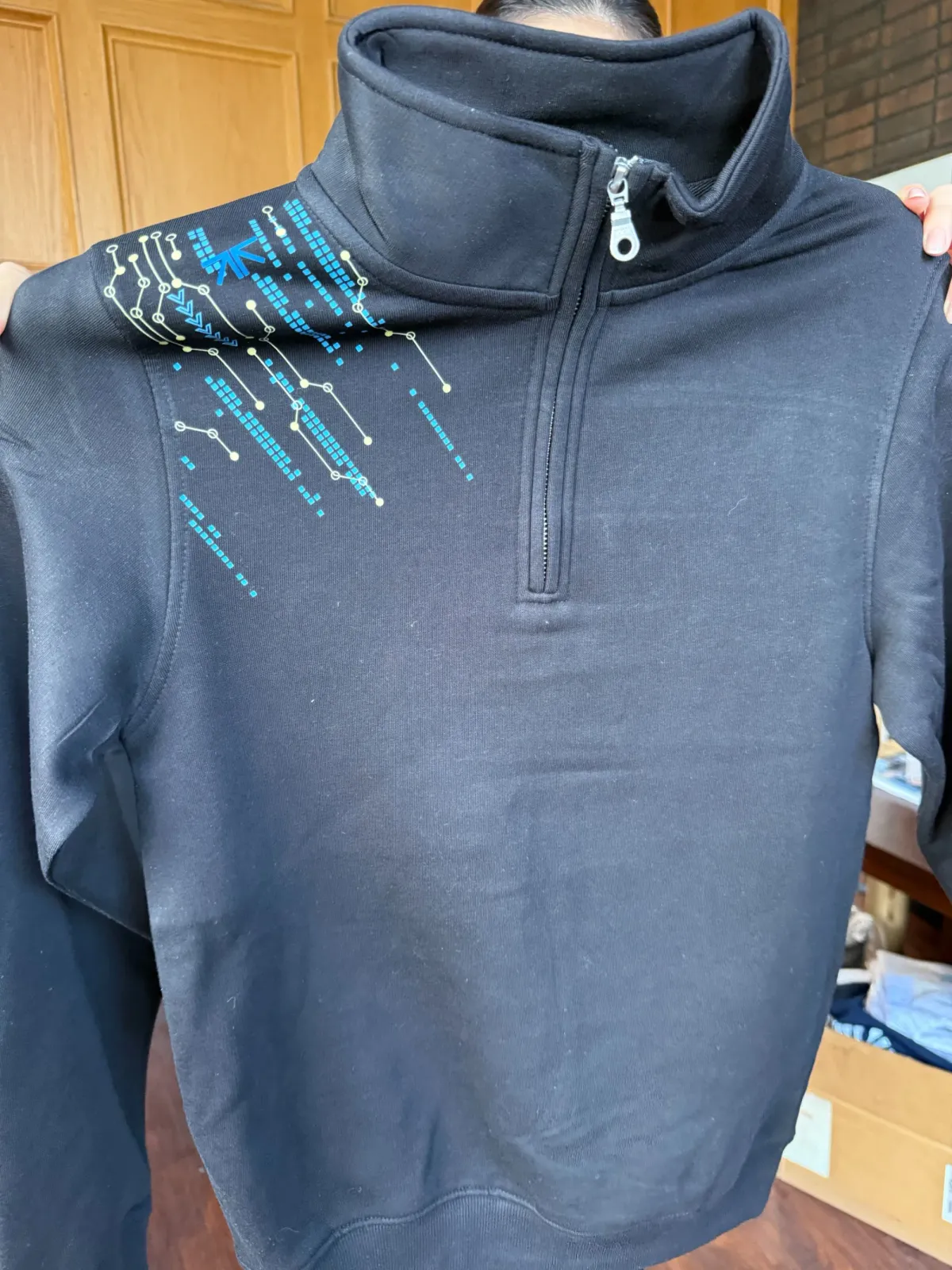
DTF transfers: full colour with no minimum
DTF (direct-to-film) means your artwork is printed onto a special film, then heat-pressed into the garment. The heat melts the adhesive into the fibres, the film peels away and the ink stays. There are no screens, so there's no setup per colour.
It's a good fit when:
- You need a small run, even a handful of pieces. DTF has no minimum.
- Your design has lots of colours, gradients or photographic detail.
- You're mixing garment types or fabrics in one order.
- Every piece is a little different, like names on the back.
Four questions to narrow it down
- How many pieces do you need? A larger run of one design often points to screen printing. A small run or one-offs points to DTF.
- How many colours are in your logo? One to a few solid colours suit screen printing or embroidery. Gradients and photos suit DTF.
- What's the garment? Caps, fleece, twill and bags are natural fits for embroidery. Tees and hoodies work well with all three methods.
- What look are you after? Embroidery reads as polished and professional. Screen printing and DTF give a crisp printed finish that's great for bold graphics.
If you're stuck between two options, that's normal. Plenty of orders mix methods, for example an embroidered left-chest logo on polos for staff and a full-colour DTF print on event tees.
See it before anything prints
You don't have to decide alone. Because we do screen printing, embroidery and DTF in our own Toronto shop, we can tell you honestly which one suits your artwork, quantity and budget. You'll approve a mock-up before anything goes to press, and two courtesy revisions are included on every order.
Want to see your logo on a real garment first? Drop it into the proof studio on our home page, or send us your artwork and quantities through our quote form and we'll get back to you with a price the same day.