Printing & embroidery
Custom embroidered toques: what to know before you order
Why toques are embroidered instead of printed, where the logo goes on cuffed and cuffless styles, how much detail a knit can hold, and how to plan quantities before you ask for a quote.
November 22, 2026 · 8 min read
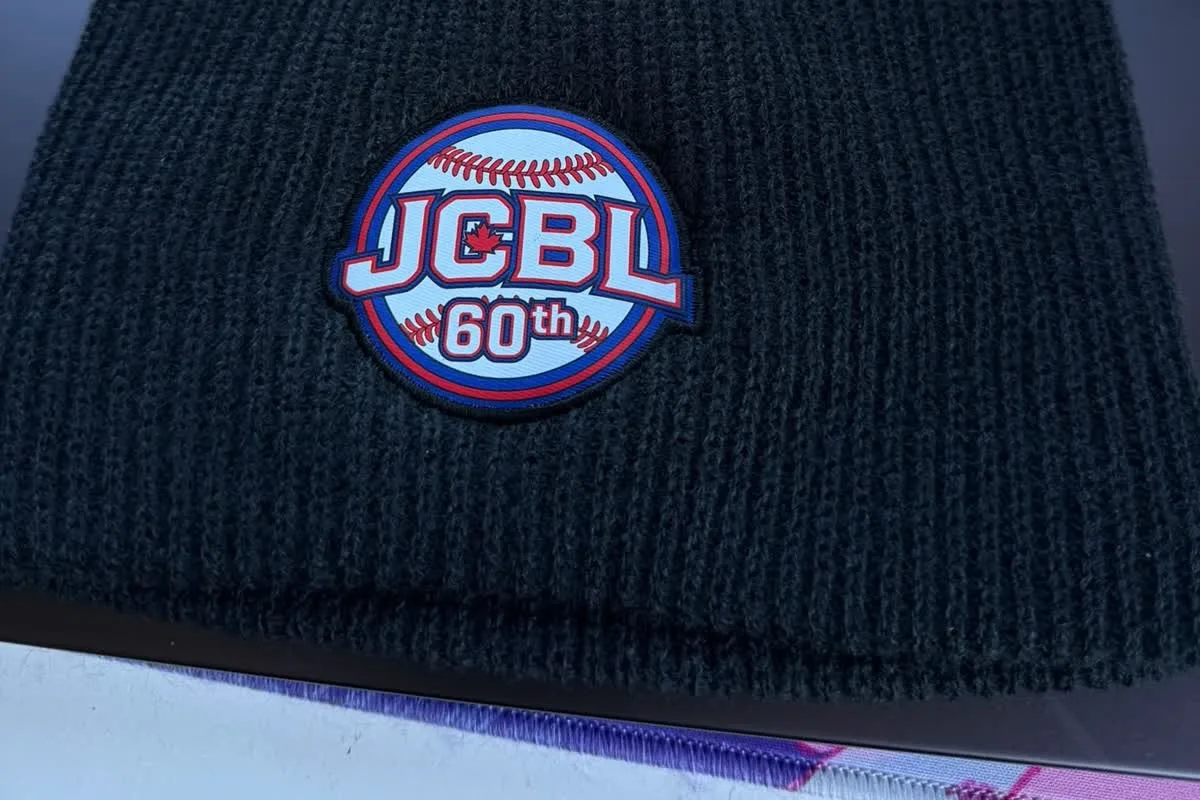
Custom embroidered toques are the standard choice for groups because thread stitched into a knit holds up to stretching, washing and winter weather in a way printed ink usually doesn't. Before you order, you need 3 things sorted: a cuffed or cuffless style, a logo simple enough to read at small sizes on a ribbed knit, and a realistic headcount. Get those right and the toques will look good on everyone in the group.
Toques are what schools, teams and companies order as the weather turns cold in November and December. Below is what to think about before you send your artwork, so you get a clean result and a quote you can work with.
Why are toques usually embroidered rather than printed?
A toque is knit, which means the surface is made of ribs, loops and small gaps. It also stretches a lot when someone pulls it on. Ink needs a fairly flat, stable surface to sit on, and on a knit it can sink into the gaps, look patchy, or crack once the fabric stretches over a head.
Embroidery works differently. The design is stitched into the fabric with thread, so it moves with the knit instead of fighting it. It also has texture and a slight raised look, which suits a winter accessory and reads as a finished product rather than a giveaway.
Durability matters too. Toques get stuffed in pockets, tossed in backpacks, soaked in snow and run through the wash. Stitched thread holds its shape and colour through all of that. It's the same reason embroidery is the finish people associate with staff uniforms, caps and polos.
Printing still has a place in a winter order. If your group also wants hoodies or tees, those can be screen printed or done with DTF transfers, while the toques are embroidered with the same logo. We'll recommend the method that fits each item and quantity when we quote.
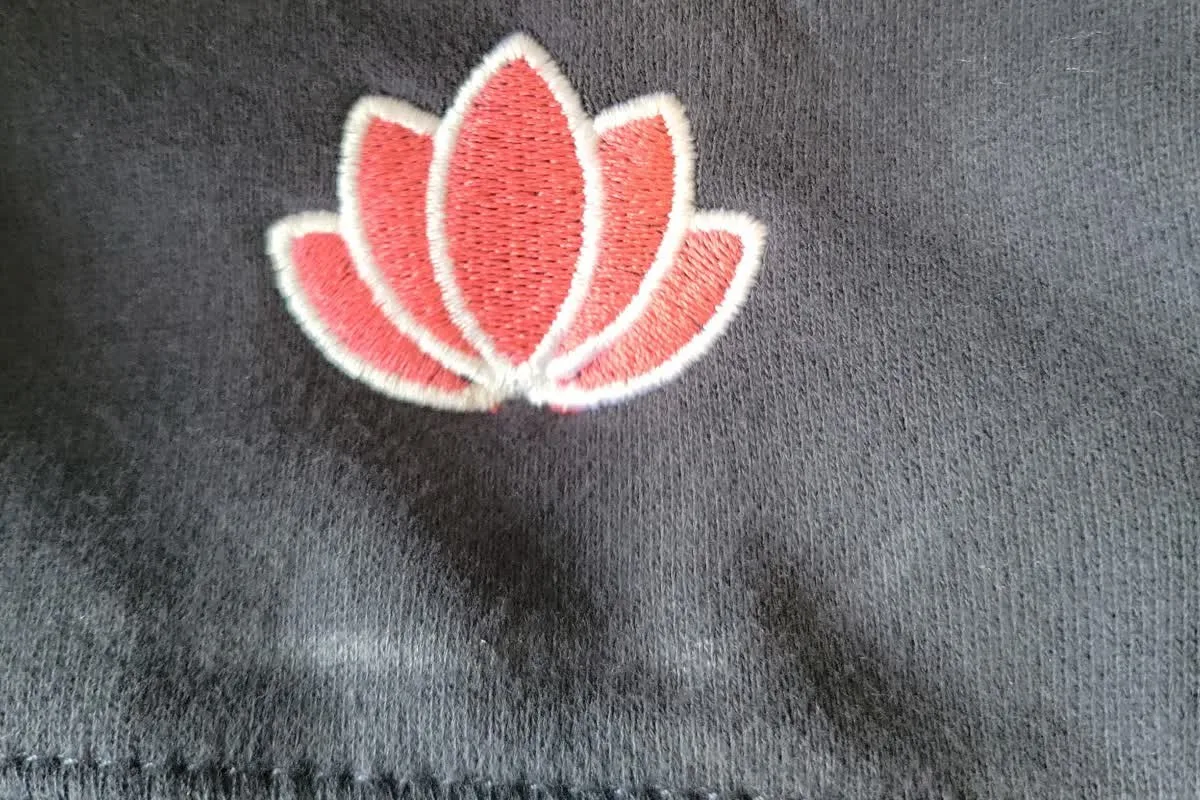
Cuffed or cuffless: where does the logo go?
The style of toque decides where the logo sits and how big it can be. This is worth settling before you finalize your artwork, because a logo that fits one style may not fit the other.
Cuffed toques
On a cuffed toque, the logo goes on the front of the folded cuff. The cuff is the most popular spot because it's at eye level, it sits flat compared with the crown, and the back of the stitching is hidden inside the fold.
The limit is height. The logo has to fit inside the cuff with a little breathing room above and below, so a cuffed toque suits wide, short logos best: a wordmark, a crest with the name beside it, or a simple icon. A tall, stacked logo will have to be shrunk to fit, and that can make small parts hard to read.
Cuffless toques
On a cuffless toque, also called a beanie or a slouch style, the logo sits on the front of the body, just above the bottom edge. With no cuff to work within, you usually have more height, so taller or stacked logos fit more comfortably.
The trade-off is that the back of the stitching sits against the wearer's forehead, unless the toque has a lining. It's also a single layer of stretchy knit, so careful digitizing matters to keep the design from puckering. If comfort is a priority, ask about lined styles when you request a quote.
Which one to choose
For most groups, a cuffed toque is the safe default: it's familiar, it fits most heads, and the logo stays clean and visible. Cuffless styles suit groups that want a more casual look or have a taller logo. You can compare blank styles and colours in the catalogue before you decide.
How much detail can a logo have on a knit toque?
Less than on a shirt, and that's the most common surprise for buyers. A toque logo is small, and the ribbed knit underneath adds texture that swallows fine detail. A good rule is to start with the simplest version of your logo you have.
Here's what tends to work and what tends to struggle on a knit:
- Bold shapes and solid areas stitch cleanly and read from a distance.
- Short names and initials work well if the lettering stays at least about 6 mm (0.25 inches) tall. Smaller than that and letters start to blur into the ribs.
- Thin lines and outlines can sink into the knit or look broken. Thicker strokes hold up better.
- Gradients, shading and photo detail don't translate to thread. They need to be redrawn as solid colour areas.
- A taglines or long text under the logo usually ends up too small to read. Drop it for the toque, or keep it for a larger item like a hoodie.
Many organizations already have a simplified logo for small uses, like a social media icon or a secondary mark. That version is often the best starting point for a toque.
Before anything is stitched, your logo is digitized in-house. Digitizing turns the artwork into stitch instructions: which direction the thread runs, how dense it is, and what goes underneath to keep the stitches sitting on top of the knit instead of sinking into it. This step is why the same logo can look crisp or muddy depending on how it's prepared.
For artwork, a vector file (AI, EPS or SVG) is ideal because it scales to any size. A high-resolution PNG or JPG also works for smaller decoration like a toque. Upload what you have and the system will tell you what it can be used for.
Will the thread colour match the logo exactly?
Close, but not always exactly. Embroidery uses dyed thread from a set range of colours, so each colour in your logo is matched to the nearest available thread. It can vary slightly depending on the fabric and the colour of the toque.
There are a few reasons the colour can look different from what you see on screen:
- Thread has a sheen. Shiny thread reflects light, so a colour can look a touch brighter or lighter than the flat colour in your file.
- The knit shows through at the edges. On a dark toque, a light colour can look slightly darker around the outline, and the reverse on a light toque.
- Screens vary. The colour on your monitor or phone is not a reliable reference to begin with.
To get as close as possible, send your brand colour codes if you have them, such as Pantone numbers. Pick a toque colour that contrasts with your logo: a navy logo on a navy toque will disappear, while white or gold on navy stands out. If one colour in your logo matters most, say so when you order so it gets the most attention.
If exact colour matching is critical for something else in your order, like a large logo on a tee, screen printing hits spot colours very accurately. For toques, embroidery is still the better finish, so it's worth accepting a small shift in shade.
How many toques should you order for a group?
Toques make quantity planning easier than most apparel, because most are one size fits most. You don't need to collect a size breakdown, which removes the usual back-and-forth with parents, players or staff.
Start with your headcount, then think about extras:
- Count everyone who should get one: players and coaches, staff, volunteers, or students in a grade.
- Add a few spares for new members who join mid-season, lost toques, and the person who was missed on the list.
- Ask whether some people want 2, for example a toque in each team colour, or one for a parent as well.
- Round up toward the next sensible quantity. Embroidery is most cost-effective from 12 pieces, and the price per toque generally drops as the quantity goes up, because the setup is shared across more pieces.
If people are paying for their own toques, guessing the number is the hard part. A group webstore solves that. We build a branded store with the products you choose, open it for a set window, then close it and produce every order together. Your organization keeps a share of each sale. You can read how it works on the webstores page.
Plan around the cold weather
Most decorated orders ship in 7 to 10 business days after the mock-up is approved. Count back from the day you want toques handed out, and leave time for approving the mock-up and for a webstore window if you use one. Rush service is available for an added surcharge if you're short on time, but ordering early in the season is the easier route.
Price depends on the toque style, the number of thread colours, the size and stitch count of the logo, and the quantity. Send us your artwork and quantities through the free quote form and you'll have a price the same day.
Shop the look
Common questions about custom embroidered toques
Can the toques ship to each person instead of one address?
Yes. Individual orders can ship to each buyer, or the whole run can be delivered to one address. Tell us which you want when you place the order.
What if I need to change the design after approving the mock-up?
Tell us as soon as possible. Once a job is in production, changes may not be possible, and if they are, they can carry a fee and push back the delivery date. Checking the mock-up carefully, especially spelling and colours, saves trouble later.
Can I order matching hoodies or tees with the same logo?
Yes, and many groups do. Hoodies and tees can be screen printed, embroidered or done with DTF transfers depending on the artwork and quantity. Include everything in one quote request and we'll suggest the right method for each item.
Topics: toques, embroidery, winter apparel, team apparel, spirit wear